10 Female Playwrights You Should Know
10 Eighteenth-Century Female Playwrights You Should Know
Written by Ashleigh Gardner December 21, 2016
These women were vehement rebels of gender stereotypes and wrote novels, poetry, and plays to combat guild's harsh criticism of their intelligence and creativity. They persevered, and they've given women in theatre a leg upwardly. Bank check out your foremothers of theatre beneath!
Mary Pix (1666 – 1709)
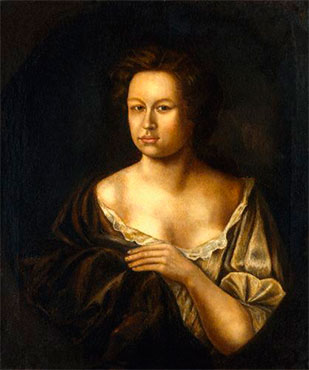
Pix's plays were very successful among audiences, but she ran into legal strife when she submitted one of her plays to the Drury Lane theatrical company for review (and for possible production). George Powell, the director of the company, rejected the play and then wrote ane of his ain, taking the plot and a main grapheme direct from Pix'south ain work. This resulted in a large plagiarism scandal that caused Pix to finish putting her proper name on her own works (lest she be taken advantage of once more by a man wishing to steal her work).
Trivia: Pix was and so well known — and criticized — that she and three other female playwrights were satirized in a play called The Female person Wits written by an anonymous (thought to be male) playwright .
Popular works: Ibrahim, the Thirteenth Emperour of the Turks , The Spanish Wives, and The Deceiver Deceived
Susanna Centlivre (c. 1667 to 1670 – 1723)
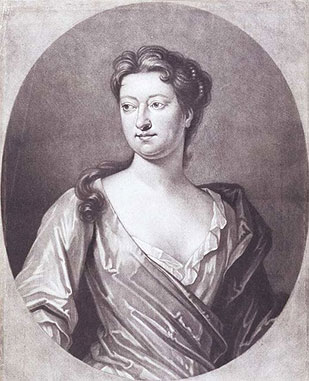
The most successful female playwright of the 18th century, Centlivre started writing poetry at age 7 and continued until her death. Her works largely follow the Spanish way, and her best and most performed ones include a female heroine whose intellect matches that of her male counterpart'southward.
Trivia: Centlivre's works were largely liberal and feminist in nature, and she received harsh criticism from Alexander Pope for offending religious and social norms of the fourth dimension.
Popular works: The Perjur'd Husband; or, The Adventures of Venice, The Basset Table, The Platonic Lady, and A Bold Stroke for a Wife
Catharine Trotter Cockburn (c. 1674 – 1749)
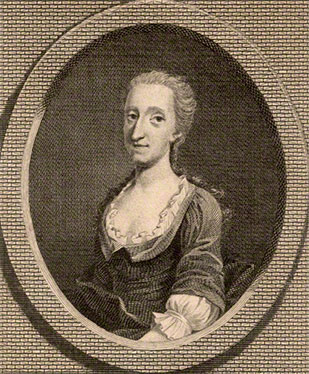
This Scottish-born playwright was precocious from an early on age. Her commencement book was published when she was only fourteen, and her beginning published play Agnes de Castro was staged two years later. She was satirized along with Mary Pix in the play The Female Wits , but this didn't finish her from writing more plays and philosophical treatise.
Trivia: She wrote a defence force of John Locke'due south philosophical An Essay Apropos Man Understanding. Locke was so pleased that he sent gifts of money and books to the young writer.
Popular works: Agnes de Castro, Fatal Friendship, The Unhappy Penitent, and The Revolution of Sweden
Eliza Haywood (c. 1693 – 1756)
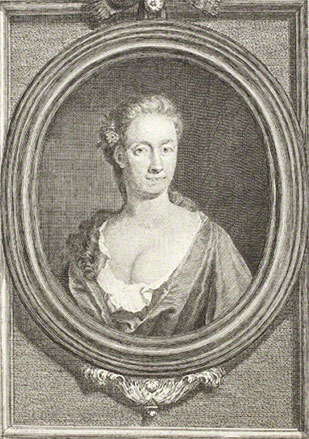
Though Haywood is primarily studied today as a novelist, Haywood published over seventy works during her lifetime, including plays, novels, and periodicals, and political writings.
Trivia: Haywood published A Companion to Theatrein 1735; it contains plot summaries for contemporary plays of the time, literary criticism, and dramaturgical observations.
Popular works: A Wife to be Lett and Frederick, Duke of Brunswick-Lunenburgh
Charlotte Charke (1713 – 1760)
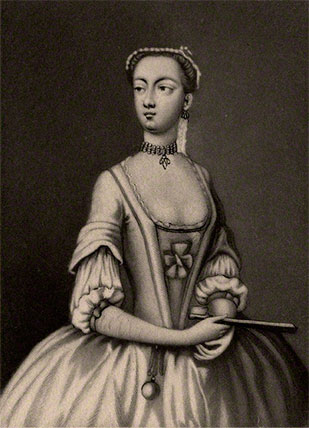
An actress beginning and a writer afterward, Charke performed in Susanna Centlivre'southward production of The Busybody in a breeches role (playing a man). In addition to being known as an actress, Charke was a well-known female feminist, transvestite, and openly gay woman who played by and large male parts. She attended social events and occasionally lived day-to-day as "Mr. Charles Chocolate-brown". For the most part, her masculine persona garnered fiddling shock, maybe because, as an actress, she was allowed to be more progressive in her lifestyle.
Trivia: Charke realized her gender identification early in life when she began mimicking her father, and later, when she taught herself shooting, gardening, and horse racing.
Pop works: The Carnival; or, Harlequin Blunderer
Hannah Cowley (1743 – 1809)
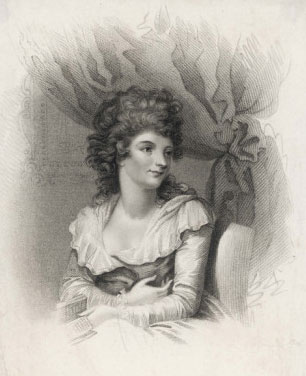
One of the foremost playwrights of the 18th century, Cowley'due south plays were produced oft her lifetime. Themes of feminism and independence dominate Cowley's work, and her plays address a woman'southward struggle to overcome the injustices thrust upon her by society's expectations of female gender roles.
Trivia: Inspired to begin writing while attending a play with her husband, Cowley wrote the starting time deed of her comedy The Runaway overnight.
Pop works: The Runaway, Who's the Dupe?, Albina, The Belle's Stratagem, and A Bold Stroke for a Husband
Elizabeth Inchbald (1753–1821)
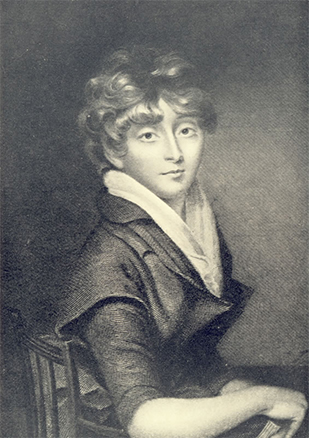
Inchbald suffered from a stiff spoken communication impediment, and when she went to London to human activity, her stammer was so bully that people hated watching her performances. She appeared in Hannah Cowley'southward The Belle'southward Stratagem , and subsequently began writing her own plays. Over her lifetime, eighteen of her plays were published, and her novels, A Simple Story and Nature and Fine art , are however widely read today.
Trivia: Her play Lovers' Vows was featured past Jane Austen in her novel Mansfield Park.
Popular works: A Mogul Tale, Appearance is Against Them, Such Things Are, and I'll Tell You What
Mary Robinson (c. 1757 – 1800)
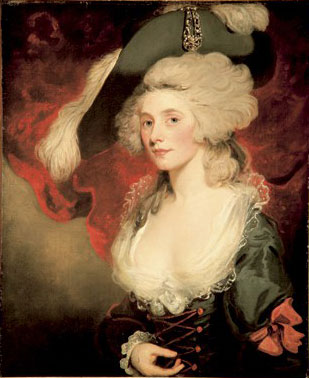
A pop social figure during her lifetime, she was an extra, a playwright, and the first public mistress of King George 4. Her most famous roles were Perdita in an accommodation of Shakespeare's Winter'southward Tale and Rosalind in Equally Yous Like It.
Trivia: Robinson was all-time known for "breeches" parts, or roles in which women played men.
Popular works: The Lucky Escape, A Comic Opera, Nobody: A One-act in Two Acts, and The Sicilian Lover: A Tragedy in Five Acts
Joanna Baillie (1762 – 1851)
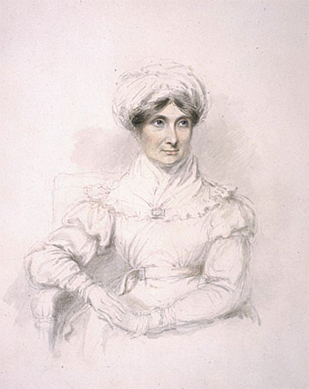
Admired for her literary prowess and her gentle disposition, Baillie, a Scottish playwright, hosted a literary guild at her home. She intended all of her plays to be performed instead of just published, and though few of her plays ended up on the stage, her influence in published drama is profound.
Trivia: Later her death, a sixteen-foot-high memorial was erected in her memory in the churchyard of her birthplace at Bothwell in Scotland.
Popular works: De Monfort and Family Legend
Maria Theresa Kemble (1774–1838)
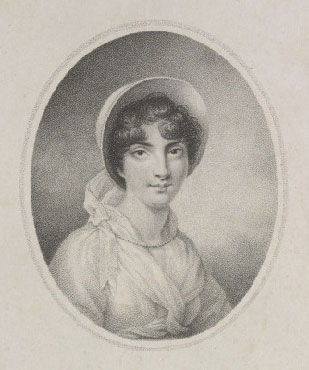
Like Mary Pix, Kemble submitted one of her unpublished plays, Get-go Faults , to the Drury Lane theatre visitor and was plagiarized, in the same fashion Pix was, by a male playwright who worked for the company. She assisted her hubby, Charles Kemble, in the production of multiple plays.
Trivia: At six, she appeared at the Vienna Opera Business firm as Cupid in a ballet by Jean-Georges Noverre.
Popular works: The Day after the Wedding, or a Wife's Beginning Lesson, Smiles and Tears, or the Widow'due south Stratagem, and Match-making, or 'Tis a Wise Child that knows its own Begetter
Hungry for more theatre history? Check out our other stories beneath!
- ten Nineteenth-Century Female Playwrights You Should Know
- x Classic Russian Playwrights You Should Know
- 12 Elizabethan and Jacobean Playwrights You Should Know
- seven Greek and Roman Playwrights You Should Know
- 13 Archetype American Playwrights Yous Should Know
- Diva Alarm #1: Ethel Merman
- Diva Alert #2: Mary Martin
- Diva Alarm #3: Marilyn Miller
- Diva Alert #4: Gertrude Lawrence
Ashleigh Gardner received her AA in Theatre/Drama/Dramatic Arts from Valencia College and her Bachelors Caste in English Literature and Masters Degree in Literary, Cultural, and Textual Studies from the University of Cardinal Florida. She is a playwright, an actor, and PerformerStuff.com's Editor.
Source: https://performerstuff.com/mgs/10-eighteenth-century-female-playwrights-you-should-know/
0 Response to "10 Female Playwrights You Should Know"
Post a Comment